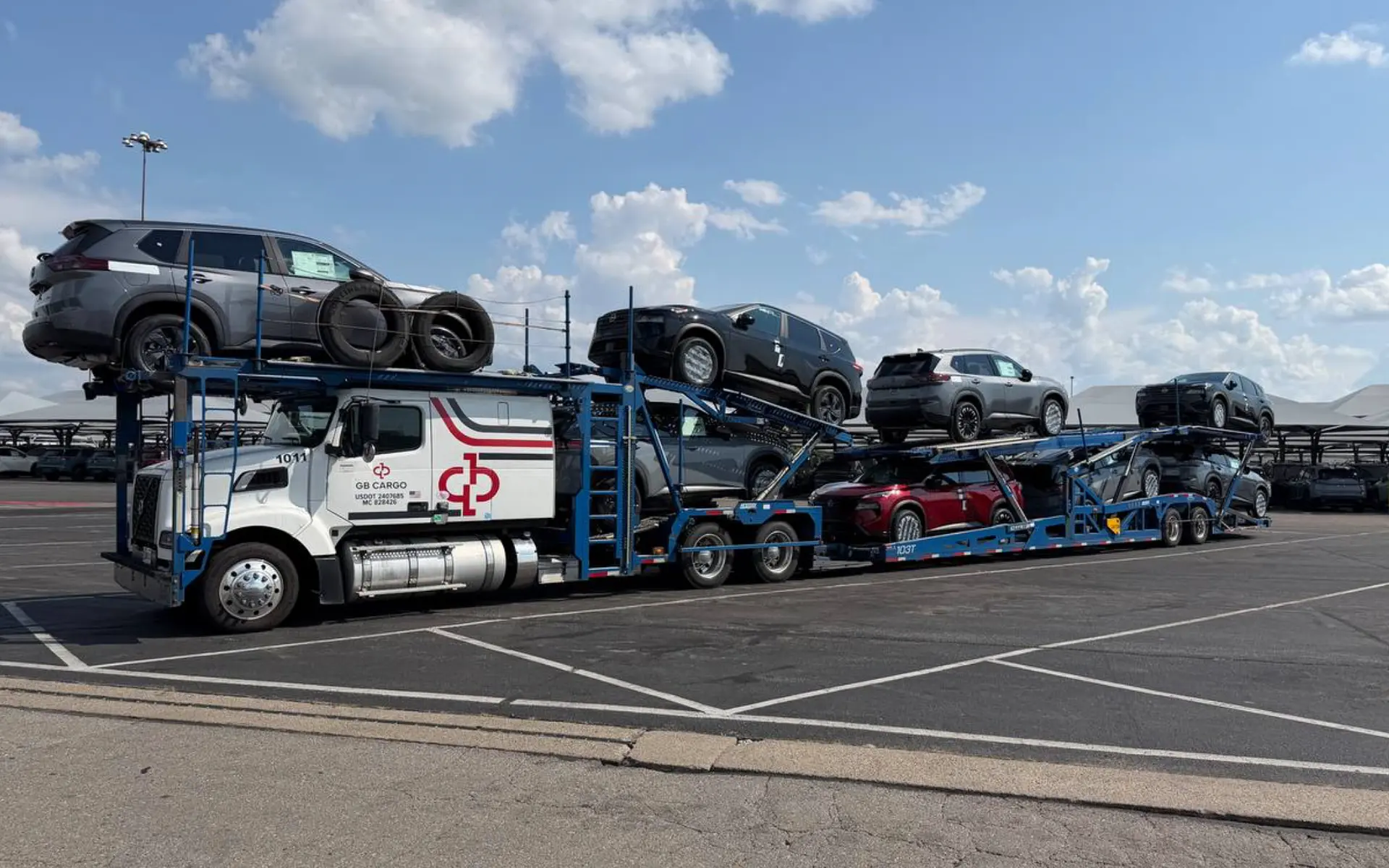
Concentration Risk vs. Coordination Risk: The Real Trade-Off in Vehicle Logistics Carrier Strategy
Single-carrier or multi-carrier? Explore the real costs, hidden risks, and OEM case evidence behind vehicle logistics carrier strategy decisions.

Every carrier you add to your network costs more than the onboarding fee.
The real expense is harder to see. It’s the service degradation window that opens every time you redistribute volume across a new partner. It’s the governance burden that grows faster than your logistics headcount. And it’s the quiet erosion of the carrier investment — the familiarity, the route knowledge, the driver consistency — that made your primary lanes perform in the first place.
Here’s what makes this interesting: Nissan North America runs 19 carriers in its finished vehicle logistics network. The OEM conducts six-month face-to-face business reviews, quarterly all-carrier webinars, and shares daily VIN pipeline data with every partner. And even with that level of governance infrastructure, Nissan discovered through a carrier survey that several of its carriers weren’t even processing the pipeline information being sent to them.
If an OEM with that operational discipline can’t fully close the coordination gap, the question for every vehicle logistics operation isn’t whether to diversify your carrier base. It’s how much coordination cost your organization can realistically absorb — and whether the resilience you’re buying is worth the service depth you’re trading away.
Most shippers budget for carrier onboarding as if it’s a one-time expense. It isn’t. The costs divide into three categories, and only the first one shows up in the initial budget.
Every new carrier requires baseline verification before the first VIN moves: USDOT and MC number checks against FMCSA (Federal Motor Carrier Safety Administration — the federal body that regulates commercial trucking) records, safety rating review, CSA (Compliance, Safety, Accountability) score analysis across all seven BASIC categories, BOC-3 filing confirmation, ELD (Electronic Logging Device — records driver hours for regulatory compliance) compliance verification, and direct insurance verification with the carrier’s insurer.
In OEM-grade programs, insurance requirements far exceed federal minimums. Federal law requires $750,000 in automobile liability and $25,000 in cargo insurance. In practice, OEM carrier programs typically require cargo liability coverage up to $500,000, auto liability at a minimum of $1 million, and an additional $5 million umbrella policy. For high-value electric vehicles, per-load cargo coverage must align with vehicle valuation — standard thresholds often fall short.
The critical point: compliance monitoring is not a one-time gate. A carrier’s safety score can deteriorate between contract award and first load. Each carrier added to a roster requires its own continuous insurance tracking, safety alert monitoring, and CSA score review. The Transportation Intermediaries Association’s 2024 Fraud Report documented the stakes plainly: the average cost of falling victim to a fraudulent carrier was approximately $400,000 per company.
OEMs expect EDI (Electronic Data Interchange) and API connectivity with their carriers for shipment tendering, status updates, milestone reporting, and electronic proof of delivery. Adding a new carrier to an existing TMS (Transportation Management System) workflow is never frictionless. EDI software platforms typically cost $300 to $3,000 per month depending on transaction volume, with additional implementation fees for custom integrations.
Here’s where the structural challenge appears: approximately 97.4% of car-haul carriers operate fleets of 20 or fewer trucks. Most of these carriers do not have internal IT teams. When an OEM or large shipper onboards a small carrier, the technology integration burden often falls on the shipper, not the carrier. That cost rarely shows up in the carrier evaluation.
Each carrier relationship generates ongoing administrative work: contract management, rate negotiation, routing guide maintenance, invoice reconciliation, dispute resolution, and scorecard administration. These are not trivial functions in finished vehicle logistics. Nissan’s operational cadence — daily pipeline data shared with each of 19 carriers, six-month reviews, quarterly webinars — illustrates the governance infrastructure required to maintain alignment across a multi-carrier model.
GM offers another lens. The OEM has four separate internal teams involved in quality adjudication and claims management — a level of fragmentation that GM itself has identified as an active area of reform.
No published, auto-transport-specific data exists on the marginal cost of adding each incremental carrier. But the pattern synthesized from available evidence is consistent: the transition from a single-carrier to a two-carrier model is the most expensive step, because it requires building the compliance infrastructure, TMS configuration, and governance cadence from scratch. Adding the third through fifth carrier is progressively cheaper in hard costs, as existing infrastructure absorbs each new partner. Beyond five actively managed carriers, hard costs continue declining per carrier, but soft costs — communication overhead, inconsistent service standards, governance complexity — accumulate approximately linearly and may even accelerate.
Hard costs front-load. Soft costs compound. Most transition budgets account for the first and ignore the second.
The dominant model in North American OEM vehicle logistics is a tiered routing guide. The primary carrier has first opportunity on every load in a given lane. If the primary declines, the secondary carrier receives the tender. If the secondary declines, a tertiary carrier is offered the load. If all contracted carriers pass, the load moves to spot.
A more aggressive variant is the waterfall model, which ranks 10 to 15 carriers by cost on a lane. As each carrier refuses a load, the next in sequence receives the opportunity. This model maximizes pricing pressure but trades service depth for rate optimization — and requires significantly more administrative infrastructure to maintain.
In practice, OEMs use a hybrid: contracted primary carriers handle guaranteed-volume lanes, while a non-asset logistics provider functions as a spot and overflow layer for volume surges, seasonal spikes, or geographic gaps where contracted capacity is unavailable.
The structural reason multi-carrier models exist at the OEM level isn’t preference — it’s arithmetic. With 97.4% of car-haul carriers operating fewer than 20 trucks, no single asset-based carrier can cover the full geographic scope of a major OEM’s national distribution network. Multi-carrier is not optional at that scale. The question is how many carriers, structured how.
Pricing leverage through volume concentration. An OEM or large fleet shipper that delivers guaranteed annual volume on predictable lanes can negotiate rate certainty for the contract period, including fuel surcharge schedules and rate locks that protect against spot market volatility. The pricing premium paid to secondary and tertiary carriers for lower volumes on the same lanes can substantially erode the cost savings that diversification was supposed to deliver.
Service depth that compounds over time. Carriers handling consistent volume on consistent lanes develop institutional knowledge: familiarity with rail yard personnel, dealer receiving procedures, vehicle sequencing requirements, and OEM-specific damage reporting protocols. Industry evidence links this directly to outcomes — repetition and familiarity from contractual volume assignment drive down damage rates and claim costs. At GB Cargo, we maintain an above 99% damage-free delivery rate, and that performance is built on exactly this principle: consistent lanes, consistent drivers, consistent processes.
Reduced administrative burden. A single-carrier model requires one compliance monitoring function, one TMS integration, one scorecard cadence, one dispute resolution protocol, and one relationship manager on each side. For shippers with limited logistics staffing, this simplicity has direct cost value.
Operational simplicity during transitions. Program launches — new model introductions, EV platform shifts — require intensive communication and process alignment between OEM and carrier. GM’s experience launching six major battery electric vehicle programs in 2024 required extensive cross-functional coordination across quality, engineering, and safety teams. The coordination complexity of executing that protocol across 19 carriers versus two is not proportional — it’s exponential.
Here is the position we hold based on operational experience: the institutional knowledge embedded in long-term carrier relationships is an asset that shows up in damage ratios and lead times. It’s also the first thing destroyed when you diversify for diversification’s sake. Adding carriers to check a risk-mitigation box, without evaluating whether each carrier receives enough volume to invest in your lanes, is not risk management. It’s risk redistribution — from concentration risk into coordination risk.
Risk mitigation is the headline argument, and COVID proved it. Single supply sourcing ranked among the top-10 supply chain risk factors during the pandemic. OEMs with diversified carrier portfolios had access to flex capacity when primary carriers were disrupted. Those without it faced plant evacuation failures and compounding dwell costs that represented millions in excess expenses.
Geographic coverage is a structural necessity. No single asset-based carrier — regardless of fleet size — covers the full lane network required by a national OEM distribution program. Multi-carrier models allow OEMs to assign carriers based on geographic specialization, placing regionally strong operators in the lanes where their density, dealer relationships, and driver availability confer real advantages.
Competitive pricing pressure preserves negotiating optionality. In long-tenured single-carrier relationships, the carrier becomes aware of the switching cost embedded in the relationship. Maintaining at least two contracted carriers on significant lanes preserves rate benchmarking capability and negotiating leverage at contract renewal.
Surge and seasonal capacity keeps plants moving. Model year changeovers, plant restarts after shutdowns, and Q4 volume pushes exceed the capacity any single carrier can absorb. Without a secondary or spot capacity layer, plant yard congestion creates production-line backpressure with direct manufacturing cost implications.
But here is where most diversification strategies break down: shippers add carriers expecting resilience, then underinvest in the governance infrastructure required to make it real. Scorecards get built but never reviewed. Data gets shared but never processed. The result is not a multi-carrier network — it’s a list of carriers, and a list is not a strategy.
Both models carry risks that don’t appear in vendor proposals or procurement scorecards. They surface 12 to 18 months into a model and compound quietly.
Quiet rate drift. In long-term single-carrier relationships, carriers may incrementally introduce rate increases, surcharge expansions, or accessorial charges that are individually small but compound materially over multi-year contracts. Without competitive market intelligence from alternate carriers, shippers may not recognize the drift until it’s substantial. At GB Cargo, we address this directly: we discuss all pricing aspects — including surcharges and accessorials — before contracts are signed, and we aim for full transparency on rate structures. But not every carrier operates that way, and shippers in long-term single-source relationships should actively benchmark.
Carrier financial fragility. Many car-haul carriers operate at thin margins. A single carrier’s equipment aging, driver shortage, or financial distress can become the shipper’s operational emergency with limited warning. This risk is invisible when the relationship is performing well — which is precisely when it should be evaluated.
Institutional knowledge as a transition liability. The same deep knowledge that makes a long-term carrier relationship valuable creates a switching cost that’s easy to underestimate. When an OEM is forced to change a primary carrier, the ramp-up period for the replacement — learning rail yard protocols, dealer receiving procedures, vehicle sequencing — is a real operational cost window.
The carrier investment paradox. Carriers receiving fragmented volume have less incentive to invest in lane-specific optimization, equipment alignment, and driver assignment stability. Damage rates and dwell times may structurally worsen in a widely distributed model compared to a concentrated one. Industry evidence is explicit on this point: repetition and familiarity from contractual volume commitment drive down damage rates. Dilute that volume, and you dilute that investment.
The governance infrastructure illusion. Scorecard systems, KPI frameworks, and quarterly reviews are administratively demanding. Shippers who deploy multi-carrier models without investing proportionally in governance — the AIAG (Automotive Industry Action Group) scorecard disciplines, carrier review cadences, real-time compliance monitoring — absorb all the costs of diversification and capture none of the benefits.
Fragmentation amplifying during crises. In a capacity crunch, multi-carrier models face a distinct failure mode: multiple carriers simultaneously deprioritizing your volume in favor of higher-margin spot freight. Unless contract commitments are strong and your volume is genuinely meaningful to each carrier, the illusion of redundancy dissolves precisely when you need it most.
These OEM examples are not templates to copy. They’re illustrations of the governance investment required at different scales of carrier diversification.
Nissan North America operates 19 carriers with an intensive governance cadence: six-month face-to-face business plan reviews, quarterly all-carrier webinars on safety, quality, cost, and delivery, and daily VIN pipeline data shared with every carrier. Even with this infrastructure, Nissan discovered that data availability does not equal data utilization. Several carriers were not processing the information being sent. The lesson: technology and data sharing alone do not resolve alignment gaps. Human-driven accountability is required.
General Motors runs an outbound logistics network complex enough to require four separate internal teams for quality adjudication and claims management. GM has identified this fragmentation as an active reform priority, pursuing technology platforms that guide and document the quality process through different milestones. The EV transition has layered additional complexity: BEV programs require trailer modifications, specialized chocking, and mobile charging coordination at rail ramps — all of which multiply across each carrier in the network.
Volkswagen Group of America has responded to recent disruptions by building optionality into its network proactively — shifting volume between rail and truck as capacity tightens on either mode, and developing a digital outbound order book that gives logistics partners a shared, real-time view of vehicle orders and movements. VW’s approach represents a deliberate multi-carrier, multi-modal strategy with technology as the coordination layer, not an afterthought.
There is no universally correct carrier structure. The rational choice depends on variables specific to your operation.
Concentration makes sense when: your volume is stable and predictable on defined lanes, you have a high-trust carrier relationship with demonstrated performance, your geographic scope is tightly defined, and your primary carrier is financially stable with low risk of capacity withdrawal.
Diversification becomes necessary when: demand volatility is high — driven by tariff swings, EV platform launches, or production disruptions — geographic coverage requirements exceed any single carrier’s network, corporate risk policies require demonstrated supply chain redundancy, or the carrier market is experiencing active capacity tightening.
There is also a middle path. The non-asset logistics overlay model — asset-based primary carriers for contracted volume, with a non-asset provider managing overflow, surge, and geographic flex — is an approach we view positively. It addresses a real problem: the need for carrier diversity without the full administrative burden of managing every small carrier individually. The non-asset provider consolidates compliance, vetting, and technology functions, presenting the shipper with a single accountability layer while accessing a broader carrier network. It adds a cost layer, but for operations with limited logistics staffing, it may be the most viable path to meaningful redundancy.
One timing principle holds regardless of your model choice: diversify during stability, not during crisis. Reactive diversification — onboarding new carriers while managing an active service failure — compounds the transition cost with urgency premiums. Proactive network design, done when operations are running normally, is substantially cheaper and less disruptive.
GB Cargo is an asset-based auto transportation company headquartered in West Lafayette, Indiana. We own and operate our equipment — we are not a broker.
Our fleet runs on new equipment, directly improving safety, reliability, and vehicle condition on delivery.
Every client works with a dedicated account manager — not a call center.
Real-time tracking from pickup to delivery gives your team the visibility to communicate proactively.
We maintain an above 99% damage-free delivery rate.
We discuss all pricing — including surcharges and accessorials — before contracts are signed.
When you’re ready to evaluate a direct carrier relationship, reach out for a conversation.
Neither a single-carrier nor a multi-carrier model is inherently superior. The rational choice depends on your volume stability, geographic scope, carrier financial health, and — critically — how much governance infrastructure your organization is willing to build and sustain.
More carriers is not inherently more resilient. Resilience comes from the governance depth behind the carrier count, not the count itself. A three-carrier network with meaningful volume commitments, rigorous scorecard discipline, and clear accountability will outperform a ten-carrier roster where no single partner receives enough volume to invest in your lanes.
What is the difference between a single-carrier and multi-carrier model in auto transport?
A single-carrier model concentrates all or most shipment volume with one transportation provider on a given set of lanes. A multi-carrier model distributes volume across multiple carriers, typically structured as a routing guide with primary, secondary, and spot tiers. Single-carrier models offer pricing leverage and deeper process alignment; multi-carrier models provide geographic coverage, risk diversification, and competitive pricing pressure.
How do OEMs decide how many carriers to use for vehicle logistics?
The decision depends on production volume, geographic distribution of plants and dealerships, and corporate risk tolerance. Most OEMs use a tiered routing guide: a small number of contracted primary carriers receive guaranteed volume, while secondary and spot carriers handle overflow and geographic gaps. Industry evidence suggests that governance capacity — not risk models — is the practical ceiling on carrier count.
What are the hidden costs of switching from a single carrier to multiple carriers?
Beyond compliance vetting and technology integration, the most underestimated costs are the service degradation window during transition (dwell time spikes, damage claim increases), the ongoing governance burden of maintaining scorecards and reviews across multiple partners, and the carrier investment paradox — where volume fragmentation reduces each carrier’s incentive to optimize performance on your lanes.
Audit your current carrier structure against the decision framework above. Specifically, evaluate whether your governance capacity — compliance monitoring, scorecard administration, carrier review cadence — matches the number of carriers you’re managing. If your carrier count exceeds your governance capacity, you’re carrying the cost of diversification without capturing the benefit.
If you’re considering consolidating or expanding your carrier network, the most effective time to make that move is during stable operations — not in reaction to a disruption. Start the conversation with our team while your current lanes are performing, and build your next carrier structure from a position of clarity rather than urgency.
Stay informed on the latest news and insights from GB Cargo.