Do Car Auctions Work Directly With Car Hauling Carriers or Through Managed Freight?
Learn how car auctions work with carriers through managed freight, the workflows that prevent dry runs, and the KPIs that reduce dwell time and fees.
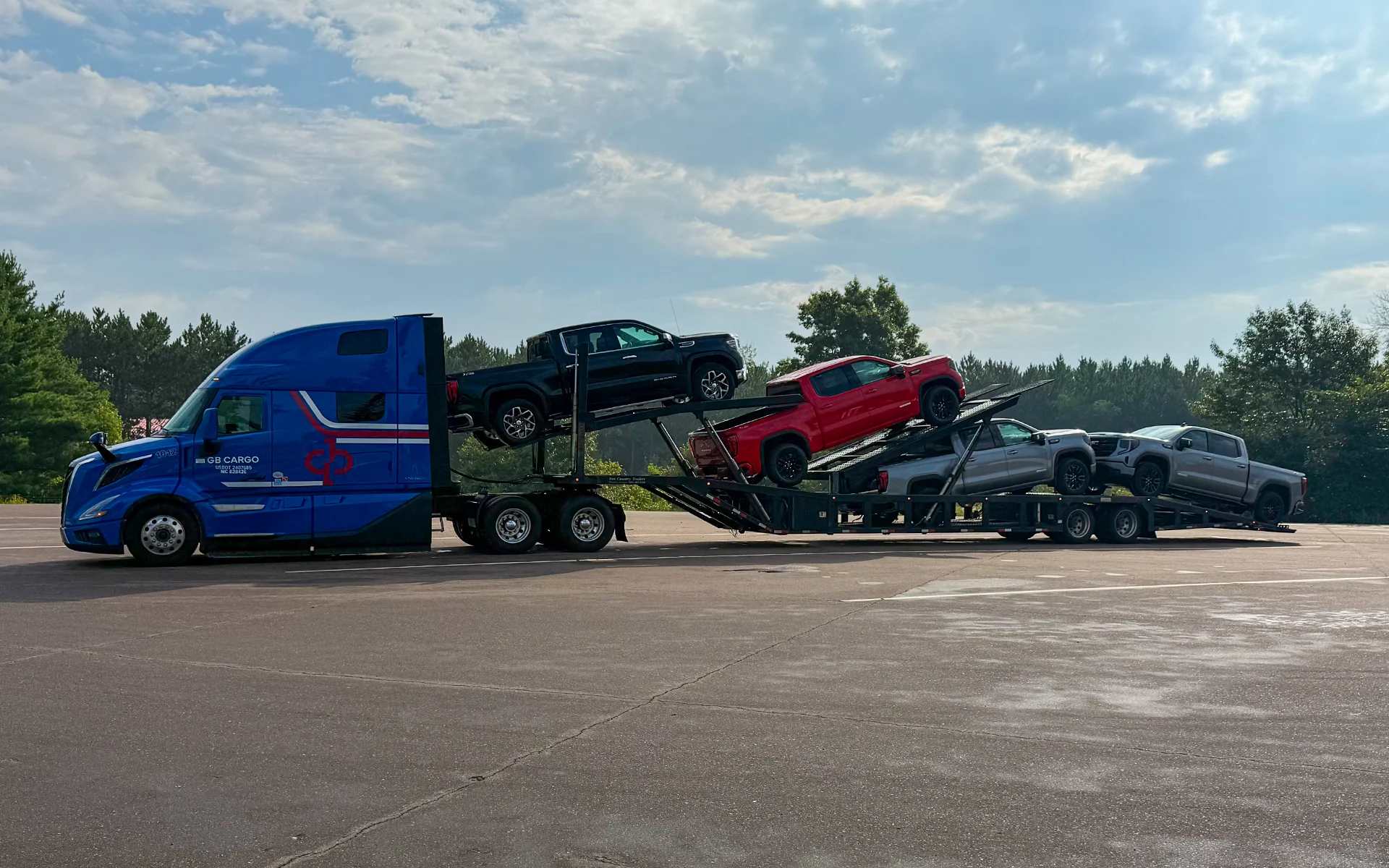
Car auctions do work with car hauling carriers—but in most large auction ecosystems, the relationship is rarely “one auction yard, one carrier.” Instead, many auctions have built managed freight programs that sit between the buyer and the trucking capacity. The auction controls the workflow, pricing, compliance, and customer experience, while carriers provide the execution.
If you’re responsible for transportation inside an auction organization, this distinction matters. It shapes how you design your carrier network, what you can promise buyers, how you control dwell time (how long cars sit after sale), and how you reduce the two outcomes everyone wants to avoid: storage fees and failed pickups (dry runs).
Below, we break down the two dominant models, why managed freight has become the center of gravity, and the operating details that make it run cleanly at scale.
Watch The Video Overview
In the self-managed approach, the buyer (usually a dealership) arranges transport after purchase. They may dispatch a carrier they already use, work with a broker, or post the move to a load board. The auction’s role is typically limited to releasing the vehicle and controlling yard procedures.
This model can work well when buyers have strong transport partners and tight internal discipline. But it also creates friction you can’t fully control: inconsistent carrier quality, variable pickup timing, and less predictable customer outcomes.
In managed freight, the auction offers a transportation option inside the buying workflow (at checkout or within the auction platform). The buyer selects transport, pays through the auction program, and the auction (or its logistics subsidiary) assigns and manages the carrier.
This is why the question “Do auctions work directly with carriers?” is often a yes—but through a managed layer. That layer can look like an in-house logistics arm, a brokerage subsidiary, or a tightly managed carrier network with digital dispatch and compliance controls.
Examples of managed freight ecosystems in the U.S. remarketing space include:
We work within these environments, and the operational reality is consistent: managed freight succeeds when the execution details are standardized—especially release readiness, pickup discipline, and exception handling.
Managed freight didn’t become popular because it’s trendy. It became popular because it solves three structural problems auctions and buyers face:
When managed freight is designed well, it can feel like a proprietary fleet without the capital cost of owning trucks. But it only works if the program is operated like a system—not a list of carriers.
Most programs follow a similar architecture:
Managed freight programs typically maintain an approved carrier network with:
Some programs also segment carriers by load type (standard running vehicles vs salvage/inoperable) and by service region.
Even when an auction’s shipping program feels “in-house,” it’s commonly an asset-light model. The auction controls the system; carriers control the equipment and drivers.
That’s where asset-based carriers matter. When we’re deployed into a managed freight environment, we can bring predictable capacity and standardized execution because we control our own trucks and operations team.
If you run managed freight, this is where programs either win or bleed.
A common root cause of failed pickups is dispatching when the vehicle is not truly ready. “Sold” is not the same as “released.”
In our operations, we treat release readiness as a gating step. We confirm release and pickup requirements ahead of time with the shipping manager on the auction side so the driver doesn’t arrive missing a gate pass, authorization, or correct pickup instructions.
Minimum “release packet” we recommend standardizing:
If your program standardizes this packet, your dry run rate will drop—fast.
Speed is important in managed freight, but it has to be framed correctly. Our goal is simple:
We typically aim to pick up vehicles as soon as possible—often within a few hours after dispatch—when the vehicle is released and ready.
That last clause is the whole game. “A few hours after dispatch” only works when the program has release discipline. Otherwise you get the worst outcome: quick dispatch + gate turn-away.
Auctions vary widely in:
For managed freight teams, the play is not to “fight” the yard reality. The play is to design your dispatch system around it:
Managed freight is not one operational problem—it’s three, depending on volume:
A single vehicle is often straightforward. The main risks are release readiness and yard access. If those are clean, the move is typically clean.
Small batches add coordination complexity. The key is making sure the truck you send can accommodate the mix of vehicles, and that all VINs are actually released and available—not “two released, one pending.”
This is where programs are won or lost. In high-volume scenarios, we don’t treat it as “dispatching more.” We treat it as planning a program:
When this is done well, you get stable outcomes: predictable pickups, fewer exceptions, and better buyer experience.
Vehicle condition is the most under-managed variable in auction transportation.
Salvage and certain auction categories carry higher odds of:
The hard truth: if condition surprises show up at the gate, you’ll pay for it—in time, rescheduling, customer frustration, and sometimes storage.
Our approach is simple and practical:
Transparency upfront protects everyone: the auction program, the carrier, and the buyer.
Callout: What to capture in condition notes
Managed freight programs live and die by the quality of their carrier network. At a minimum, managed networks typically enforce:
For specialty categories (especially salvage/inoperable), programs may also verify:
This is not “bureaucracy.” It’s how you avoid claims, disputes, and repeat failures that erode the program’s credibility.
Managed freight is positioned to protect chain of custody because it can enforce consistent documentation.
At minimum, a clean chain of custody includes:
When you run managed freight, you’re not only moving vehicles—you’re managing risk perception. Buyers care less about the words “chain of custody” and more about the outcome: “If something happens, is it clear what happened and when?”
If you track everything, you’ll manage nothing. We recommend focusing on a tight set of KPIs that connect directly to buyer experience and yard efficiency:
If these are trending in the right direction, the managed freight program is delivering real operational value—not just “offering shipping.”
The fastest way to improve managed freight outcomes is to make your carrier network feel less like “vendors” and more like a repeatable operating system.
What we see work consistently:
Most managed freight programs don’t need more carriers. They need better alignment with the carriers already in the network.
Who is responsible for securing transportation from a car auction?
In most cases, the buyer is ultimately responsible for making sure transportation happens after purchase. Managed freight changes the workflow by letting the buyer select an auction-run option, but the buyer still initiates that choice and benefits from the auction’s coordination.
What causes most failed pickups (dry runs) in managed freight?
The biggest drivers are dispatching before release is truly ready, missing gate pass/authorization details, and vehicle condition surprises (especially inoperable units). Tight release packets and condition flagging reduce dry runs dramatically.
How should we handle non-running vehicles inside managed freight?
The key is making condition constraints visible upfront and matching the carrier/equipment to the load. If a non-running unit is disclosed and agreed in advance, execution is straightforward; if it shows up as a surprise, the program needs a clear renegotiation or reschedule rule to avoid unsafe or impossible pickups.
What should we measure to prove managed freight is improving?
Focus on dwell time, released-unit dispatch-to-pickup time, dry run rate, damage-free ratio, and exception resolution time. These KPIs connect directly to yard efficiency and buyer satisfaction.
Car auctions absolutely work with car hauling carriers—but the dominant model in today’s remarketing ecosystem is managed freight, where the auction controls the system and carriers deliver the execution. The programs that perform best treat transportation like an operating discipline: release readiness before dispatch, tight authorization workflows, condition transparency, and standardized documentation. When those basics are in place, speed becomes achievable—and storage fees, dry runs, and disputes become the exception instead of the norm.
Stay informed on the latest news and insights from GB Cargo.