Car rental fleets live and die by utilization. Cars that sit in the wrong city, or the wrong mix of vehicles at the wrong branch, are not just idle metal — they’re lost rental days and frustrated customers.
The fleets that consistently outperform their peers don’t move vehicles “when someone yells loud enough.” They run auto transport as a structured program tied to demand patterns, branch operations, and clear performance standards.
In this article, we’ll walk through what high-performing rental fleets tend to have in common in their auto transport programs — and how an asset-based auto carrier like our team at GB Cargo can support that approach across the lower 48 states.
We’ll focus on four big areas:
- Fleet rebalancing and repositioning
- Day-to-day operational concerns at the branch and regional level
- The role of brokers vs asset-based carriers
- Multi-vehicle transport and how the best fleets make every load count
How Rental Fleets Think About Rebalancing and Repositioning
For car rental companies, “rebalancing” and “repositioning” are not abstract terms. They’re the day-to-day work of making sure the right vehicles are in the right locations at the right time.
Some common drivers:
- Seasonal patterns: SUVs into mountain and snow markets, convertibles and smaller cars into warmer states, minivans into family-heavy destinations.
- One-way rentals: Vehicles piling up in some cities while other locations run short.
- Corporate and insurance business: Long-term contracts that temporarily shift a big chunk of inventory into one metro area.
- Events and holidays: Major conferences, sports events, or peak holiday weeks that require short, controlled “pushes” into specific locations.
High-performing fleets don’t rely on branch staff driving units around in ones and twos. They treat auto transport as a lever to actively shape utilization:
- They define target utilization and fleet mix per region.
- They use historical booking data to anticipate when and where cars will be needed.
- They schedule multi-vehicle moves ahead of time, rather than reacting only when a branch hits crisis mode.
From our side as an asset-based carrier, the most successful relationships are the ones where we’re brought into that planning early — so transport capacity is aligned with where demand will be, not just where it already is.
The Operational Reality on the Ground
It’s one thing to plan movements on a spreadsheet. It’s another to execute those moves at real branches, in real yards, with real customers standing at the counter.
High-performing fleets design their auto transport programs around the operational realities that their teams face every day.
Minimizing Disruption at Busy Locations
Most airport and neighborhood branches don’t have spare parking lots just for transport trucks. When a truck arrives:
- Someone has to be available with keys and paperwork.
- There needs to be a clear staging area for incoming and outgoing units.
- Staff can’t spend half the day walking the lot hunting for VINs.
That’s why better programs emphasize:
- Clear gate pass and access procedures agreed in advance.
- Defined drop and pickup zones so drivers know exactly where to go.
- VIN lists and instructions shared ahead of time, so branch teams can stage units and avoid scrambling when the truck rolls in.
On our side, we coordinate around branch hours, yard conditions, and airport security requirements, and we adapt schedules so we’re not dropping multiple trucks into the same tight location at the worst possible time of day.
Lead Times, Flexibility, and Surge Weeks
Rebalancing isn’t a steady, perfectly smooth graph. Some weeks look “normal,” and then you hit a:
- Peak holiday
- Market launch
- Major new corporate account
- Weather event that suddenly changes travel patterns
In those moments, surge capacity matters more than any single line-haul rate.
Because we’re an asset-based auto transportation company with our own trucks, we can usually flex from a few cars per week on a lane up to 5–7 trucks per week during high-demand periods, provided we plan together.
The fleets that benefit most from this:
- Share forecasted volumes and key dates early (even if numbers are approximate).
- Distinguish between steady flows and short spikes, so we can design capacity around both.
- Treat transport as part of the event plan, not an afterthought.
Clean Handoffs and Predictable Invoicing
Branch and regional leaders don’t want to manage disputes over:
- Wait time
- Accessorial charges
- “Who authorized” a particular run
High-performing fleets and their carriers reduce friction by agreeing up front on:
- How wait time is handled and when it starts.
- What accessorials can be charged (and at what triggers).
- What documentation is required at pickup and delivery.
From our side, we pair that with VIN-level records and clear proof of delivery, so finance teams can reconcile invoices without tracking down multiple people to verify each move.
Broker vs Asset-Based Carrier: What Rental Fleets Need to Know
Most rental fleets will eventually work with both brokers and carriers in some form. It’s not about “good vs bad,” but about understanding what each model does best and where the risks sit.
What Brokers Typically Offer
An auto transport broker arranges shipments with multiple carriers rather than running its own trucks. In practice, that can mean:
- Access to a large network of carriers across many regions.
- Potential coverage for niche or low-volume lanes.
- A single point of contact coordinating among various trucking companies.
The tradeoffs tend to be:
- Less direct control over who actually hauls the cars day to day.
- More variability in damage standards, driver training, and equipment quality.
- Another layer between the rental company and the person actually loading and unloading vehicles.
For some fleets, a broker can fill gaps in certain lanes or seasons. But for core flows and high-volume projects, many rental companies want something more stable.
Why Many Rental Fleets Favor Asset-Based Partners
An asset-based carrier like our team owns and operates the trucks and employs or directly contracts the drivers. For rental fleets, that usually translates into:
- Direct control over scheduling and capacity. We know exactly how many trucks are available for your program in a given week.
- Consistent damage standards and training. We can implement a single set of loading, securing, and inspection practices across the fleet.
- Tighter communication loops. Dispatch, drivers, and your operations teams talk directly, so issues get solved faster.
In our experience, the highest-performing rental fleets use asset-based partners on primary lanes and critical projects, sometimes supplementing with brokers only where it truly makes sense. The goal isn’t to shut out any model, but to make sure the most important flows are under the tightest control.
We lean strongly into that asset-based approach, because it’s the best way for us to stay accountable for the service we deliver.
Multi-Vehicle Transport: Making Every Load Count
Moving vehicles one by one with branch staff or drive-away drivers is rarely the most efficient solution at scale. High-performing fleets build their programs around multi-vehicle transport.
Truck Types and Load Patterns
On most rental fleet work, we rely on:
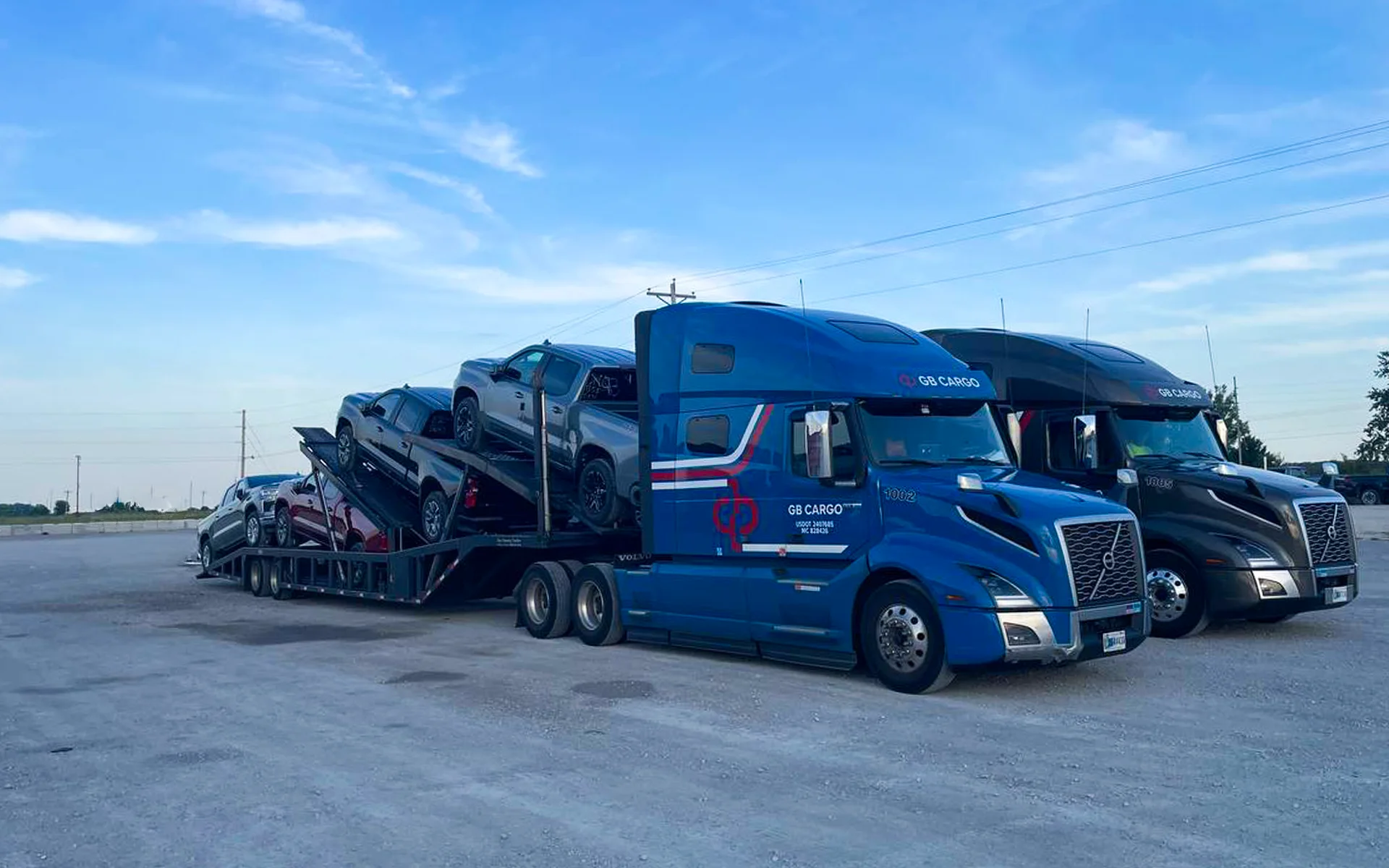
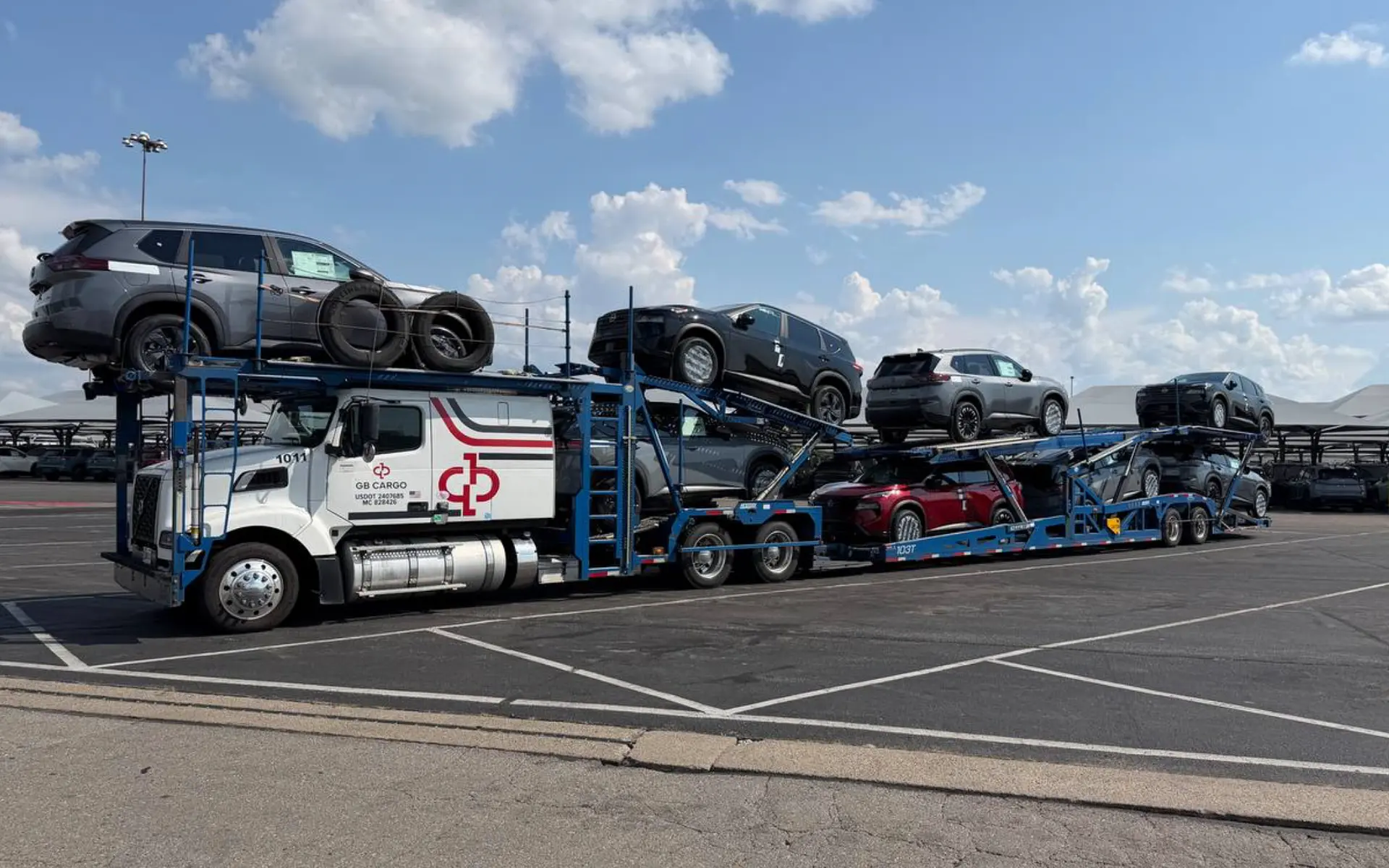
- High-capacity car haulers such as stinger-steer trailers
- 7–8 car trailers for lanes or locations that require different configurations
The exact number of vehicles per load depends on:
- Vehicle size and weight (compact cars vs SUVs vs EVs)
- Route conditions and legal weight limits
- How the mix is distributed across origin branches
The point isn’t just “fit as many as possible.” It’s to design loads so:
- Cost per unit is kept under control
- Damage risk is minimized
- Branch disruption is kept reasonable (not unloading a mixed puzzle of units that takes half a day to sort)
Partial Loads, Co-Loads, and Full-Load Contracts
This is an area where clear agreements and communication make a big difference.
We see a few common models:
- Full-load commitment:
The rental company effectively books the entire truck for a run. If only some of the vehicles are ready at pickup time, we may still move with a partial load, because that’s what the agreement allows and what the timeline requires. - Flexible co-loads:
If there are only a few vehicles to move and the agreement allows, we may add other units (for example, dealer or auction vehicles) to fill remaining space. We only do this with clear, documented permission, so everyone understands how the load is being used. - Hybrid arrangements:
Some rental partners prefer to keep primary lanes dedicated, but are open to co-loading on certain routes outside peak periods.
Situations where we adjust the plan mid-stream don’t happen often, but when they do, transparent communication and written confirmation are essential. That’s what keeps the arrangement fair and mutually beneficial.
Scaling from Regular Flows to Big Pushes
Better programs distinguish between:
- Steady flows (e.g., weekly moves between core regions)
- Big pushes (e.g., opening a new market, repositioning after major events, pre-positioning for a peak season)
For steady flows, the focus is on predictability. For big pushes, it’s about coordinated capacity — moving multiple full loads within a tight window without overwhelming receiving branches.
Because we control our trucks, we can adjust from a modest weekly plan to 5–7 trucks per week on a lane during a surge, as long as the volumes and timelines are planned together.
Controlling Risk: Damage, Claims, and EV Handling
Every rental leader has stories about a single damaged car leading to a chain of headaches: out-of-service units, claims, customer dissatisfaction, and tough conversations with insurance or finance.
High-performing fleets treat damage prevention as part of their transport design, not just a claims process.
Damage-Free Targets and Professional Handling
We design our procedures around OEM-level handling standards, using:
- Professional loading and securing practices
- Consistent condition reporting at pickup and delivery
- VIN-level documentation for every move
In practice, this allows us to comfortably stand behind a 99% damage-free outcome on this kind of work. It’s not a guarantee that nothing will ever happen; it’s a reflection of how the program is built.
When something does go wrong, what rental fleets care about most is:
- Clear documentation of pre-existing vs new damage
- Straightforward communication about next steps
- Resolution that doesn’t drag on for months
That’s why the combination of trained drivers, consistent process, and good data matters as much as any contract language.
EVs, SUVs, and “Oversized” Vehicles
The vehicle mix in rental fleets is changing. More Electric Vehicles (EVs) and larger SUVs introduce real constraints:
- Heavier EVs can reduce the number of units we can safely and legally load on a given truck.
- Larger SUVs and specialty vehicles can change both weight distribution and clearance.
Our general approach:
- If “oversized” means only a few extra inches within legal limits, we can often accommodate that on our car haulers with careful planning.
- If a vehicle requires specialized equipment (for example, certain flatbed configurations or permits), we’ll advise the rental company on the best way to handle it — even if that means using different providers.
We’re careful not to over-market “sustainability,” but we do pay attention to the operational impact of EVs on route design, load factor, and handling, and we can work with your team to factor that into planning.
Visibility and Control: Technology That Supports the Program
Even the best-planned transport program falls short if no one can see where the vehicles are or what’s happening on each move.
High-performing rental fleets insist on clear, live visibility into transport — not just summary reports after the fact.
From our side, we support this with:
- VIN-level tracking links, so stakeholders can follow specific vehicles in transit.
- A customer portal that provides a consolidated view of planned, in-progress, and completed moves.
- Digital documentation that aligns condition reports, pickup and delivery times, and proof of delivery to each VIN.
This helps rental companies:
- Make better utilization decisions because they know exactly when and where units will land.
- Coordinate branch staffing and staging for incoming vehicles.
- Simplify audit and reconciliation, because each move is tied to specific VINs and locations in a consistent way.
In other words, visibility isn’t a “nice to have” — it’s what allows transport to be managed as part of a real fleet strategy, not just a cost line.
How We Design Auto Transport Programs for Car Rental Companies
The highest-performing rental fleets don’t treat auto transport as a series of disconnected loads. They treat it as a program with clear goals, constraints, and metrics.
Here’s how we typically approach that with rental partners.
Discovery and Network Mapping
We start by mapping your world:
- Branch footprint and key regional clusters
- Typical flows (one-way rental patterns, corporate accounts, seasonal shifts)
- Pain points: chronic shortages in certain locations, recurring bottlenecks, or claims patterns
This gives us a shared view of where transport can have the most impact on utilization and customer satisfaction, not just cost.
Building a Lane and Volume Plan
Next, we work with your team to define:
- Core lanes that will see regular volume
- Expected weekly or monthly truckloads on those lanes
- Likely surge scenarios (e.g., peak holidays, market launches) and what capacity they’ll require
We balance:
- Cost per unit (benefit of multi-vehicle loads)
- Lead times and service expectations
- Operational impact on branches and regional teams
Because we operate across the lower 48 states, we can design programs that range from regional clusters to nationwide movements, as long as the volumes support it.
Governance: KPIs, Scorecards, and Continuous Improvement
Finally, we align on how we’ll measure performance. Typical items include:
Many rental fleets use vendor scorecards, quarterly business reviews (QBRs), and Service Level Agreements (SLAs). We’re comfortable working within those frameworks, focusing the discussion on:
- Utilization and availability at key locations
- How transport is supporting (or limiting) revenue
- Where process changes on either side could reduce friction or cost
The result is a program that can evolve as your fleet, markets, and customer mix change — without starting from scratch each season.
Callout: Why Rental Fleets Choose GB Cargo
Why GB Cargo for car rental fleet transport
- We’re an asset-based auto transportation company with our own fleet operating across the lower 48 states.
- Because we control our trucks, we can flex from a few cars per week to 5–7 trucks per week in peak periods, when that’s what the plan calls for.
- Our equipment is set up for multi-vehicle transport, with flexible handling of partial, dedicated, and co-loaded runs depending on what we’ve agreed together.
- We design our procedures around OEM-level handling standards and comfortably target 99% damage-free outcomes on rental fleet work.
- Our VIN-level tracking links and customer portal give your teams real-time visibility, supported by clear documentation for finance and audit.
- We coordinate with you on gate passes, staging areas, and branch operations, so your teams can stay focused on serving renters — not chasing trucks.
FAQ
How far in advance should we book auto transport for major rebalancing moves?
For regular, recurring flows, it’s helpful to plan at least a few weeks ahead so we can align truck capacity with your volumes. For larger pushes around holidays or events, the earlier we can see your forecast — even if it’s only approximate — the better we can secure the right number of trucks and avoid last-minute compromises.
Can you handle mixed moves across several locations on the same trip?
Yes, multi-stop trips are common in rental fleet work. In many cases, we can design routes that pick up or deliver at several locations on a single run, as long as timing, yard access, and vehicle mix are aligned. We’ll work with you to decide when consolidation makes sense and when it’s better to split loads.
What happens if only part of a full load is ready on pick-up day?
If you’ve reserved the full truck, we can still move with a partial load to keep your timeline intact. In other scenarios, we may discuss filling remaining space with other vehicles — but only with your clear, written permission and within the boundaries of our agreement, so there are no surprises.
How do you handle EVs, SUVs, or slightly oversized vehicles in our fleet?
We plan loads around the size and weight of your vehicles. Many EVs and larger SUVs can still move on our car haulers, but they may reduce the number of units we can safely load. If a vehicle’s dimensions push beyond what’s practical or legal for our equipment, we’ll flag it and recommend the most suitable alternative.
Conclusion
High-performing rental fleets don’t see auto transport as an isolated function. They see it as one of the main levers that keeps their fleet aligned with demand, protects utilization, and preserves customer experience.
The common pattern is clear:
- They treat fleet rebalancing and repositioning as a planned, ongoing process, not just emergency reactions.
- They design transport around branch realities, not just network maps.
- They lean on asset-based carriers for stability and control on core flows.
- They use multi-vehicle transport, clear damage standards, and solid visibility to keep both operations and finance on the same page.
As an asset-based carrier, our role is to take that mindset and turn it into a practical, workable program — one that fits your branches, your network, and your utilization goals.
Closing — Next steps
If you’re already moving a lot of cars between locations, a good starting point is to map your last few months of moves:
- Which branches are consistently short, and which carry more inventory than they need?
- Where do you repeatedly resort to last-minute solutions or one-off drives?
- Which lanes or events always feel like you’re scrambling?
From there, our team can sit down with your operations and fleet leaders to:
- Review your branch map, typical flows, and seasonal patterns
- Identify a handful of core lanes or projects where an asset-based, multi-vehicle program would make the biggest impact
- Design a pilot program with clear expectations and KPIs, then expand once it’s working for your team
You don’t have to redesign your entire network at once. Starting with a focused slice of your fleet can show what’s possible — and give your teams a more predictable way to keep cars where demand really is.