Does Car Hauler Fleet Age Matter to OEMs?
OEMs ask every carrier about fleet age, but few score it. Why truck age is a proxy, what fails on aging car haulers, and what to measure instead.
Every customer asks how old our trucks are. OEM (Original Equipment Manufacturer — the vehicle maker) logistics teams treat the answer as a shortcut for reliability, but it is self-reported, rarely checked, and it does not appear on the scorecards that decide who keeps the freight. Fleet age is missing from the OEM carrier criteria we have seen published, and the federal government's maintenance safety score never records a model year at all.
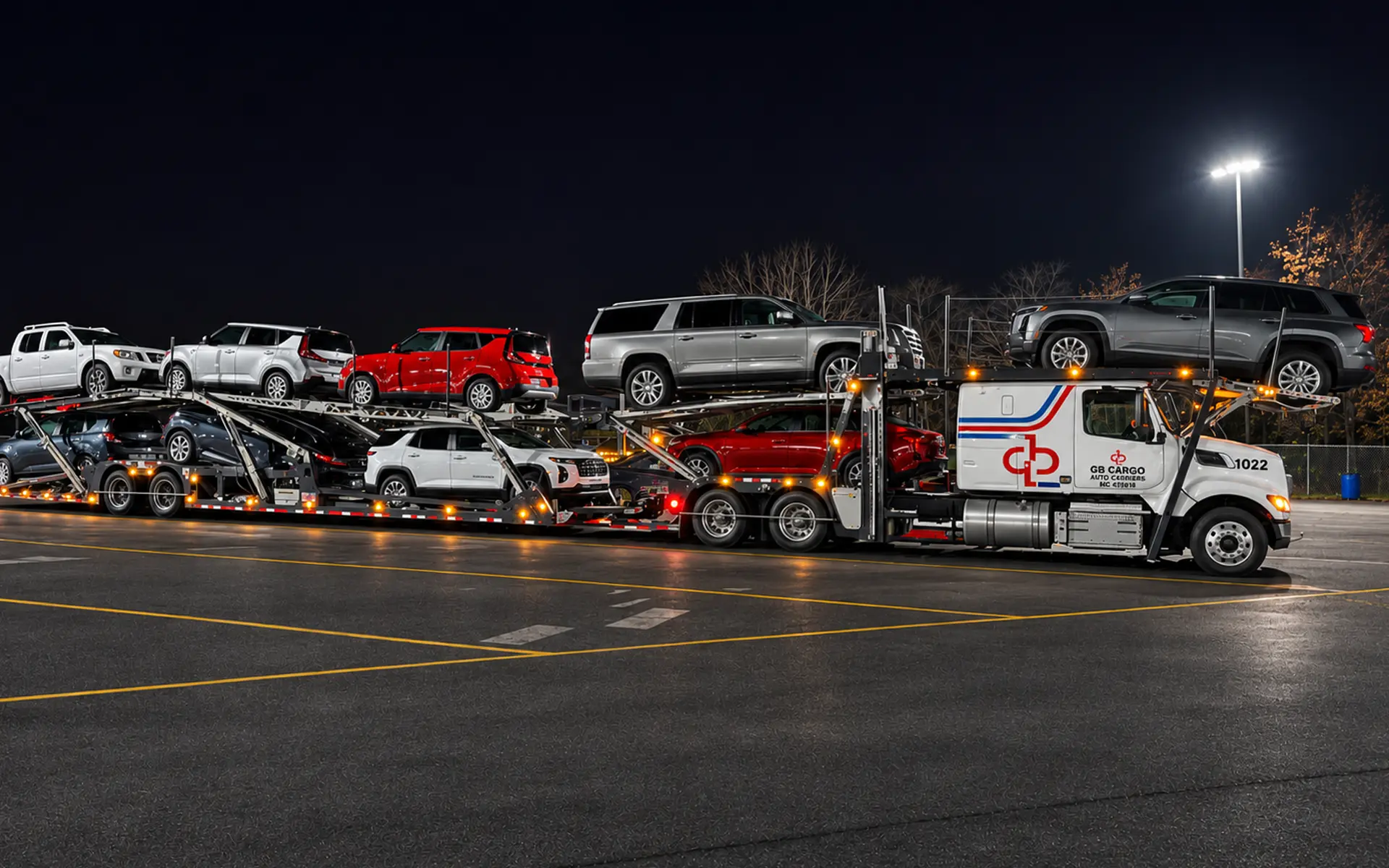
We run a fleet in which no tractor or trailer is older than two years. We still think fleet age is the wrong thing to judge a car hauler on. It is an input. What OEMs should measure is the output it produces.
The average tractor in a large U.S. fleet is a little over three and a half years old. ATRI (American Transportation Research Institute — the trucking industry's research organization) reported in its 2026 operational costs analysis that average truck age rose to 3.6 years in 2025, up from 3.4 years, the first increase since 2022. Fleets also pushed their tractor replacement threshold out to roughly 634,000 miles as equipment prices stayed high and freight stayed soft.
Those two trends are connected. When carriers keep trucks longer to avoid high replacement costs, they pay for it in the shop. ATRI found that repair and maintenance costs per mile rose 8.6 percent in 2025. Older equipment does not just cost more to keep running. It spends more time out of service while it is being fixed.
That benchmark skews toward larger carriers. The full population of registered carriers, which includes many small operators running equipment for a decade or more, typically runs older. We are not aware of a published fleet-age benchmark specific to car hauling.
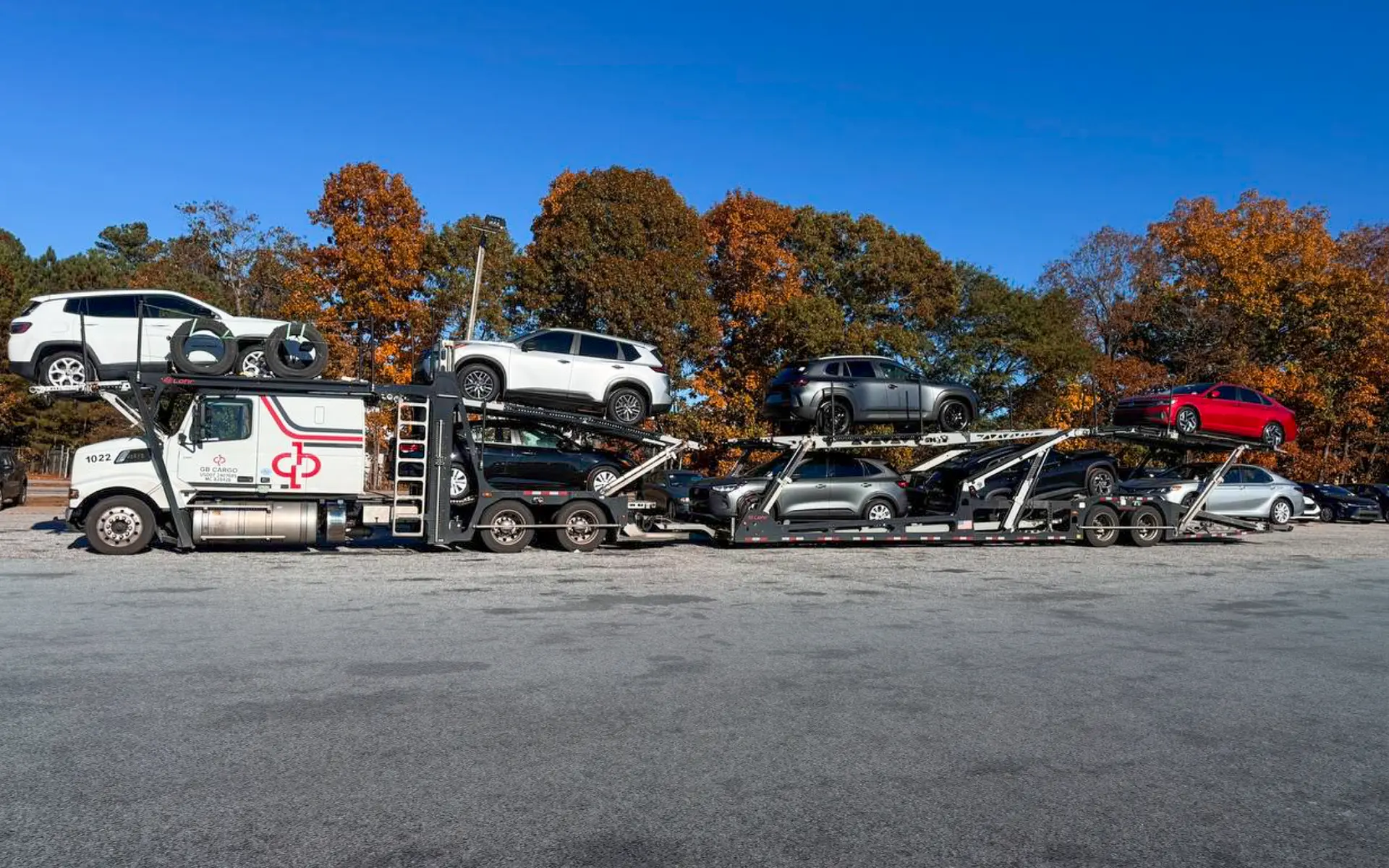
Our own standard is that no tractor or trailer in our fleet is older than two years. We hold both pieces of equipment to the same rule for a reason specific to this business: on a car hauler, the trailer is not a box. It is a machine with hydraulic decks, ramps and tie-down points, and it is the part of the rig that actually touches the vehicle. When a customer asks how old our trucks are, the answer they usually get from carriers is a tractor answer. The trailer deserves its own question.
In our experience, fleet age comes up in nearly every customer conversation. OEM onboarding teams ask it, and so do auction, rental and fleet customers. It is one of the most consistent questions we hear.
What OEMs actually score is different. At the Automotive Logistics & Supply Chain Global 2026 conference, Ford's Michael Arnold described how Ford now weighs quality, claims, contract compliance and milestone data alongside cost when buying finished-vehicle logistics. His point on price: "cost is there, but it can also hide some things." Published RFP guidance for finished-vehicle carriers follows the same pattern, covering capacity, coverage, on-time performance, visibility, and safety and compliance. In the public OEM carrier requirements we have reviewed, we have not found a maximum truck age.
So the question gets asked, and then it mostly disappears. Carriers self-report fleet age in vendor packets, and buyers rarely audit the claim. A planner who hears "our fleet is young" may come away reassured without learning anything about how that fleet performs on the road.
Even taken at face value, a single fleet-age number leaves out more than it reveals. Three gaps come up most often:
Here is where we take a position some carriers will not like: OEMs are right not to score fleet age. A carrier's model year tells you about its purchasing decisions. It does not tell you whether the truck shows up, whether the vehicles arrive clean, or whether the carrier maintains what it bought.
The federal safety system measures equipment condition, not equipment age. Under CSA (Compliance, Safety, Accountability — the enforcement program run by the FMCSA, the Federal Motor Carrier Safety Administration), carriers are ranked in several categories called BASICs (Behavior Analysis and Safety Improvement Categories). The Vehicle Maintenance BASIC covers brakes, lights, other mechanical defects and load securement, and it is built from what inspectors find at the roadside. A model year never enters the calculation.
Condition data also predicts risk. In published FMCSA research, carriers targeted for intervention because of vehicle maintenance problems had a 65 percent higher future crash rate than the national average. That is the signal planners actually care about, and it comes from inspections, not purchase dates.
Age and condition are related, but they are not the same thing. Older equipment tends to accumulate wear, which raises the odds of a violation or a breakdown. A neglected new truck can still fail an inspection, and a well-maintained older one can run clean. Age changes the probability. Maintenance determines the outcome.
That is why the better approach is to treat fleet age as one input and judge the outputs: inspection results, out-of-service history, on-time pickup and delivery, and damage-free performance. Those numbers already show up on an OEM's desk, and they reflect everything a carrier does, including how new its equipment is.
Car-haul equipment wears in ways that general freight equipment does not, because the cargo rides in the open on a trailer full of moving parts. Every failure below shows up in one of two places an OEM already tracks: a damage claim or a missed delivery window.
On the tractor, the familiar items wear first: brakes, tires, lights and drivetrain components. These are also the items that drive most roadside maintenance violations. When a tractor breaks down under load, it does not strand one shipment. It can strand up to nine finished vehicles at once.
A roadside wait is also riskier for a car hauler than for an enclosed trailer. The vehicles sit exposed to weather, road debris and theft risk until the truck moves again. Meanwhile the delivery window is shrinking, and the dealer or the next leg of the network is waiting.
The trailer is where car-haul equipment differs most from general freight. Four systems account for the wear we watch most closely:
None of these failures is exotic. They are the ordinary result of equipment wearing out. That is the point: the effects of fleet age are real, and they land in the damage and on-time numbers OEMs already score.
Breakdowns happen to every carrier, including us. Running trucks means running equipment that eventually fails. Any carrier that claims otherwise is describing a fleet that does not exist.
What newer equipment changes is how often it happens. In our experience, breakdowns are noticeably less frequent on new tractors and trailers than on aging ones. That difference matters most on dedicated OEM lanes, where a plant releases vehicles on its own schedule and a missing truck means vehicles sitting on the lot.
Lower breakdown frequency also makes the rest of our planning work. We hold spare trucks to back our dedicated commitments, and we build buffers into the delivery windows we quote. When something does go wrong, the update moves from driver to dispatch to account manager to customer. With fewer breakdowns, those spares and buffers cover the rare exception instead of a constant shortfall.
This is the part of fleet age that never shows up in an onboarding questionnaire. The breakdown that matters to an OEM is the one it actually feels: the truck that does not arrive, the window that slips, the vehicles that sit. A carrier with frequent breakdowns and a good recovery process can still protect the customer, but every recovery uses up a spare truck, a buffer or a driver's hours that should have gone elsewhere. Fewer failures leave that recovery capacity free for the problems no equipment standard can prevent, like weather, plant delays and parking shortages on crowded corridors.
That is why we keep a two-year equipment standard even though no customer scores it. We do not run new equipment to win the fleet-age question. We run it because it feeds the numbers customers do score.
General trucking surveys suggest drivers do not choose employers based on truck age. In CCJ's What Drivers Want research, just 2 percent of company drivers named a newer truck as the main reason they would switch fleets, and a comfortable seat consistently ranks above a late-model truck as a valued feature.
Our drivers tell a different story. They prefer newer equipment for two practical reasons: personal comfort, and fewer chances of being stuck waiting for repairs. For a car-haul driver, a breakdown is not an abstract maintenance event. It is lost drive time, a load that cannot move, and a schedule that has to be rebuilt.
Both things can be true. A new truck may not be what draws a driver to a carrier, but repair downtime is something drivers want to avoid. For an OEM, that matters indirectly: drivers who are not waiting on repairs are drivers who are moving your vehicles.
Keep asking about fleet age. Just do not stop there. These questions get at the outputs that fleet age is supposed to predict:
A carrier with a young fleet should be able to answer all of these easily. A carrier that can answer only the first question has given you a purchase date, not a performance record.
We are an asset-based carrier, which means we own and operate our equipment and control how it is maintained. No tractor or trailer in our fleet is older than two years, and we invest in new equipment as an input to on-time, damage-free performance. We run 9-car and stinger configurations and hold spare trucks to back dedicated commitments in our OEM finished-vehicle programs.
Customers get VIN-level tracking from pickup to delivery, with pickup and delivery photos, and a named account manager who owns communication on every load.
What is the average age of a car hauler fleet?
There is no widely published benchmark specific to car hauling. Across large U.S. trucking fleets, ATRI reported an average truck age of 3.6 years in 2025. Smaller carriers typically run older equipment. Our own standard is that no tractor or trailer is older than two years.
Do OEMs require a maximum truck age for carriers?
Not in the public carrier requirements we have reviewed. OEMs commonly ask about fleet age, but their published criteria focus on capacity, quality, claims, compliance, safety records and data rather than model year.
Does truck age affect a carrier's CSA score?
Not directly. The Vehicle Maintenance BASIC is built from roadside inspection findings such as brake, light, tire and securement violations. Older equipment can produce more of those violations if it is not well maintained, but model year itself is not part of the score.
Fleet age is worth asking about and not worth scoring. It shapes how often equipment fails, but the evidence that matters lives in inspection results, on-time performance and damage-free deliveries. A young fleet earns its place only when it shows up in those numbers.
Before your next carrier review, ask each carrier for its Vehicle Maintenance BASIC and out-of-service history alongside its fleet age. If you want to see how we answer those questions for your lanes, talk with our team about your outbound lanes.
Stay informed on the latest news and insights from GB Cargo.