Driverless Yards Could End the Lot Search That Slows Every Pickup
Driverless yards from BMW and VW automate the slowest part of a car hauler’s pickup: finding the cars. What it means for OEM carriers and the truck handoff.
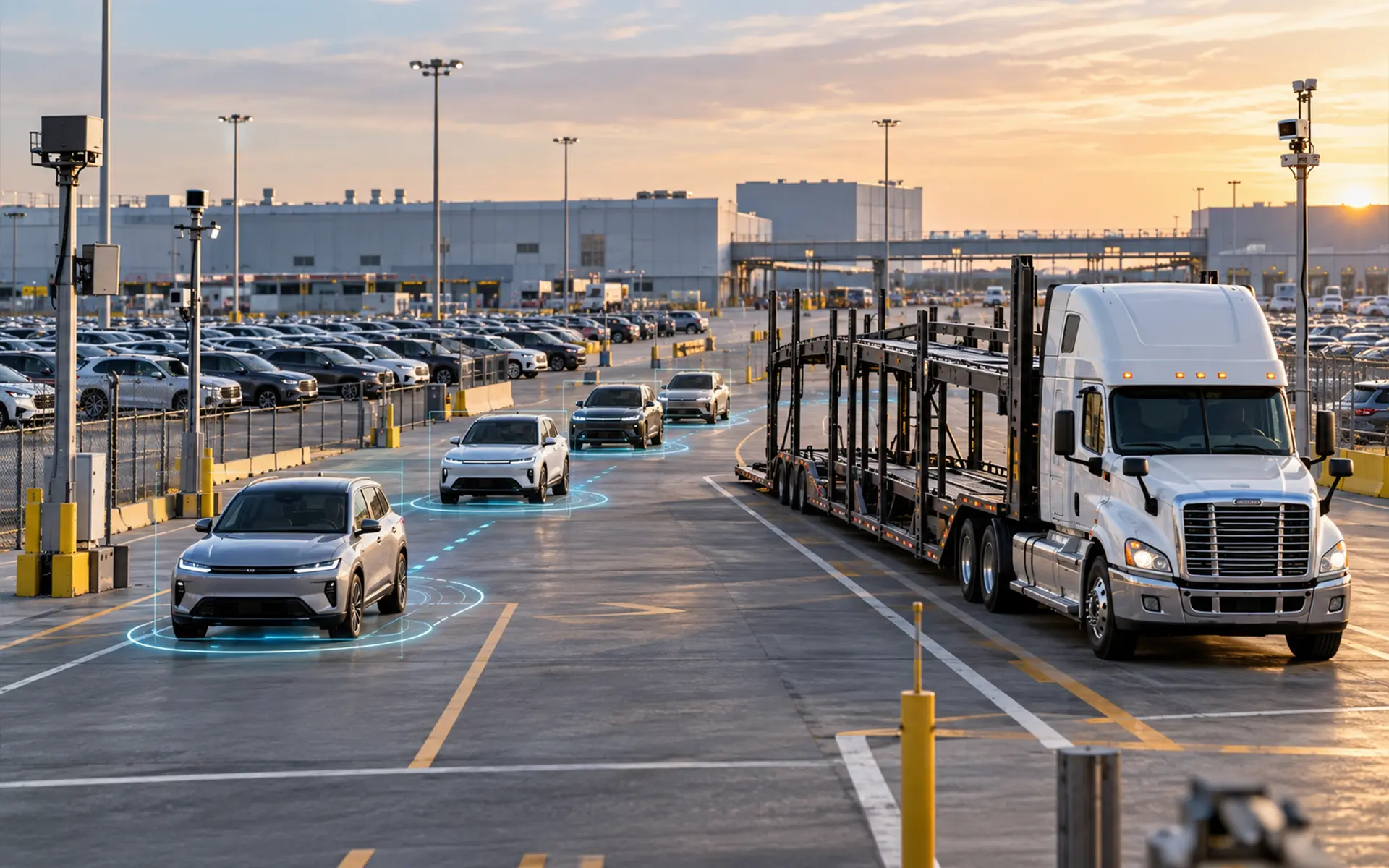
The first job automation is taking off a car hauler's plate isn't driving. At many plant lots today, cars aren't staged for pickup. A driver arrives, then walks a yard of thousands of vehicles looking for the right VINs (Vehicle Identification Numbers — the 17-character ID on every car), or waits for a security escort to lead him to each one.
Then he drives each car back to the truck, one at a time, while the rig sits and the delivery window shrinks.
Within days of each other this October, two of the most closely watched experiments in automated finished-vehicle logistics hit milestones. BMW logged its one-millionth driverless vehicle move inside its plants, and Volkswagen wrapped up a two-year driverless terminal trial at the Port of Emden. Look closely at both, and the automation happens before the truck shows up. The industry is automating the work of getting cars to the hauler — not the hauler.
Both programs prove that finished cars can move themselves safely inside a controlled site. Neither has yet proved what that is worth to the truck waiting at the gate.
Volkswagen's AutoLog project ran from 2024 through 2026 with BIBA (the Bremen Institute for Production and Logistics), Deutsche Telekom, and Finnish software company Unikie, on a budget of about €5.8 million. At Emden — a port that handled close to 1.2 million VW Group vehicles in 2025 — the team ran automated cars alongside human-driven traffic. A related test at Audi's Ingolstadt plant loaded cars onto rail wagons automatically.
The design matters more than the headline. AutoLog is infrastructure-based: external LiDAR sensors (laser scanners that map the site), a digital model of the terminal, and 5G with edge computing do the seeing and planning. Unikie's marshalling software sends each car its moves. The car doesn't need a full self-driving sensor suite; it needs to accept commands for steering, braking, acceleration, and gear selection.
BMW uses the same basic idea at production scale. Its system, built with Swiss firm Embotech, now runs at four plants in Germany and the UK, performs about 3,500 driverless moves a day, and passed one million total moves in October. At its Regensburg plant, cars drive themselves outdoors from the end of the line toward the dispatch area where trailers load.
Here is what's still missing. Volkswagen has published no throughput, damage, labor, or truck wait-time results from AutoLog, and BIBA has said the final test series is still being evaluated through year-end. In its completion announcement, VW says it will use what it learned to keep developing the technology and assess commercial readiness — not that it is rolling it out. Figures you may see quoted, such as about 20% better use of storage space and up to 25% less shuttle-related CO₂, were projections made during the project, not measured results.
The part of a pickup most likely to disappear is the part drivers like least: finding the cars.
In our experience, a typical unstaged plant pickup works like this. The driver checks in, gets a list of VINs, and heads into the yard. Sometimes a security escort drives him to each car; sometimes he searches the rows himself. He walks to a car, inspects it, drives it to the truck, walks back, and repeats for every unit on the load.
Every minute in that loop is a minute the truck isn't moving. On a large lot, the search can take a meaningful share of total pickup time — and it's hard to predict. Two similar loads at the same plant can take very different amounts of time, depending on where the cars were parked and whether an escort is free.
Plants and carriers have tried to work around the search. Yards add staff to pre-stage cars, but staging labor is exactly the kind of work that is hard to hire and keep. Carriers arrive earlier to build in search time, which only moves the wait to a different part of the day.
Locator lists and row numbers help until a car gets moved and the list goes stale. Escorts solve the search but create a new queue when two trucks need one at the same time.
Infrastructure-guided automation goes after the root cause. If the yard's control system knows where each car is and can move it, it can bring the cars for a specific load to the loading lane, in loading order, before the truck pulls in. Ford tested exactly this idea with Unikie at its Saarlouis plant in Germany: several vehicles driving themselves toward a truck instead of the driver searching the storage field.
For a carrier, that turns a pickup from a search into a check: inspect, photograph, load, go.
One honest caveat. Automation only shortens pickups where the search is the bottleneck. If a load is waiting on a release hold, paperwork, or a gate queue, staged cars sit in the lane just like unstaged ones. In our experience, though, the lot search is one of the largest and least predictable pieces of plant pickup time, which is why we think this technology matters more to car haulers than most coverage suggests.
Most coverage of driverless cars at plants and ports carries a quiet threat for trucking. We read the evidence the other way: these systems make the car hauler's job more important, and much harder to fake.
Start with where the automation lives. AutoLog and BMW's system operate inside fenced, low-speed areas that are fully mapped and controlled by the site operator. The sensors sit on poles and buildings, not on the cars. Once a car leaves that geofence, it goes back to being cargo.
That's why the highway leg isn't next. Some vendors already describe automation running from factory to dealership, but a public road is a different problem: no site sensors, no central control, mixed traffic at speed, and a far heavier safety and regulatory burden. Meanwhile, about three-quarters of new U.S. cars and light trucks travel by rail for part of their trip, according to the Association of American Railroads — and trucks still handle the first and final miles around every rail ramp, port, and plant.
So what does change? A perfectly staged lane removes the carrier's hiding place. Today, a truck that arrives late can lose that time inside a long yard search, and nobody notices. When the cars are waiting in sequence at the appointed time, a late arrival, a wrong ETA (Estimated Time of Arrival), or a missing pickup confirmation shows up immediately. Automation doesn't replace the hauler. It grades the hauler.
An automated yard runs on data, so the carriers that fit it best will be the ones whose data is as clean as the staged lane. Three capabilities stand out.
An automated system moves cars based on digital orders, so it needs to know which carrier is coming for which VINs, and when. That means carriers exchanging transport orders, VIN-level status, ETAs, and electronic proof of pickup with the shipper's systems. The connection runs through a TMS (Transportation Management System — the software that manages loads and dispatch), an API (Application Programming Interface — a direct software-to-software link), or EDI (Electronic Data Interchange — the older standard format for business messages).
The standards already exist. AIAG (the Automotive Industry Action Group) and ECG (the Association of European Vehicle Logistics) publish formats for status, inventory, transport orders, and damage data, and Volkswagen already runs outbound transport orders through a web application and API. Automation doesn't invent these requirements. It makes them operationally necessary, because the yard's physical moves can be triggered directly by the data.
We run all of these today for our OEM outbound transport work — OEM meaning Original Equipment Manufacturer, the vehicle maker. We expect them to move from a nice-to-have to a minimum requirement as yards automate.
When cars are staged for a specific truck, the pickup window narrows. A yard that has moved a full load into a lane for a 10 a.m. appointment can't use that lane for anything else until the truck arrives. That makes late arrivals more costly for the site — and much easier to measure.
Carriers that already quote realistic, buffered delivery windows and flag changes early will fit this model. Carriers that rely on the slack of a messy yard will find that slack gone.
Today, a person — a yard driver or the carrier's driver — touches every car between storage and the truck. In an automated yard, a car may cross the lot with no one behind the wheel. If a scratch appears, the question becomes: did it happen in storage, during the automated move, or after the carrier took the car?
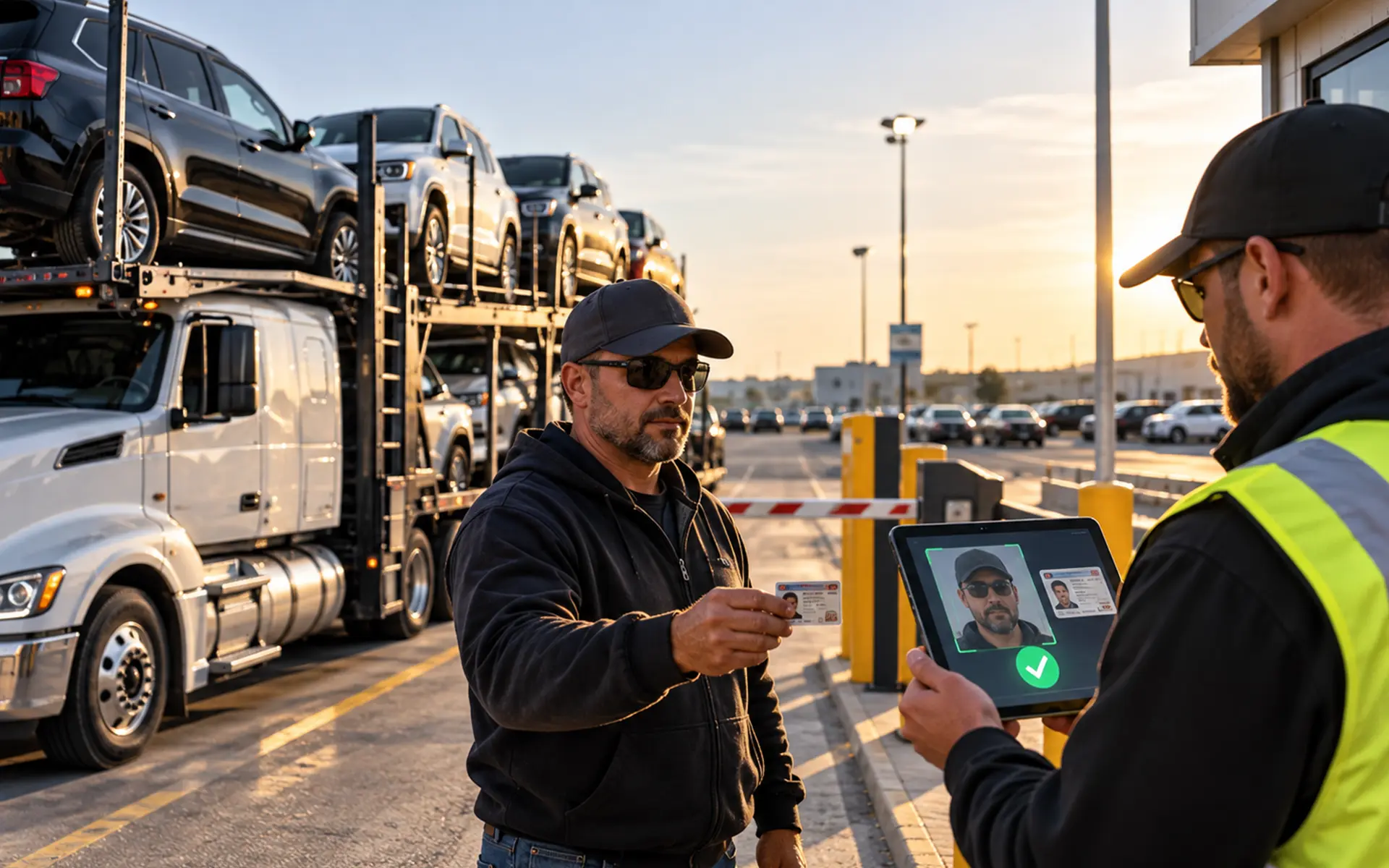
The answer depends on a timestamped condition record at the moment the carrier takes custody. Our drivers photograph each vehicle right before they touch it, and those photos are timestamped in our system. In an automated yard, that moment is exactly the custody boundary: the last instant the site owned the car and the first instant we did. Shared damage codes from ECG and AIAG give everyone a common language for what those photos show.
A note on what isn't proven yet. We believe integrated carriers are best positioned to benefit from automated yards through more loaded turns, fewer wasted hours, and simpler coordination. But no published data yet shows carriers earning higher rates or winning more volume because a yard automated. The site operator captures the clearest savings first — fewer shuttle drivers, denser parking, tighter inventory control. For carriers, the advantage today is operational, and the commercial upside will depend on how OEMs choose carriers once these yards are running.
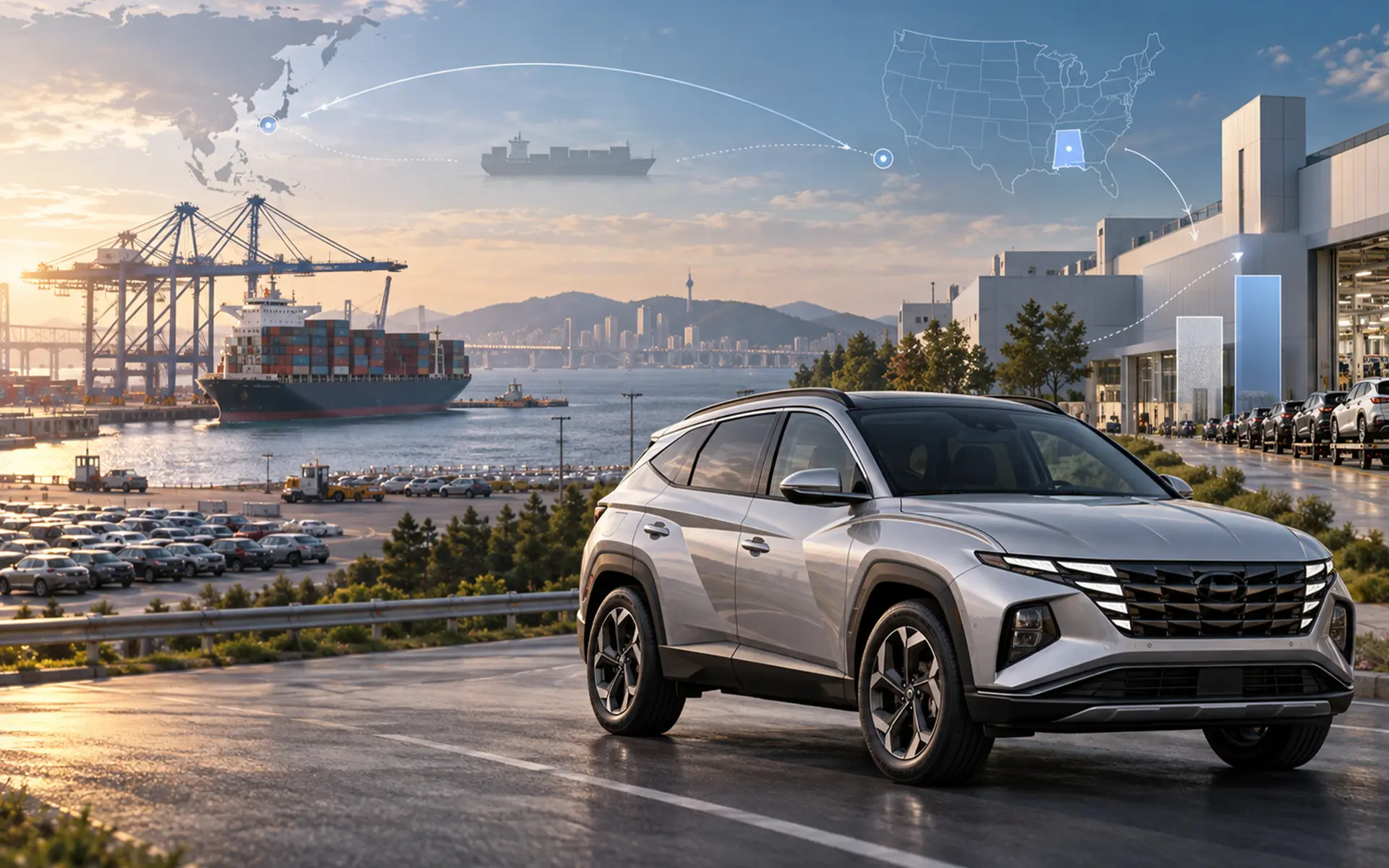
The first U.S. driverless yard at scale is likely to be a plant, not a port — and it's already on the calendar. BMW plans to bring its system into series operation at Plant Spartanburg in South Carolina in 2027. Spartanburg built about 413,000 vehicles in 2025, and roughly half of its output is exported.
If Spartanburg follows the Regensburg pattern and extends automation toward the dispatch area, carriers serving the plant could see staged loads before any U.S. port does. That's directly relevant to the Southeast, where our routing already runs.
Ports will take longer. Major U.S. auto gateways like Brunswick and Baltimore combine port authorities, terminal operators, processors, railroads, and labor providers, each with a stake in who moves a car and how. On the East and Gulf Coasts, the master contract between the ILA (International Longshoremen's Association) and USMX (United States Maritime Alliance) runs through September 2030 and includes strong protections around automation. We found no public evidence of AutoLog-style driverless vehicle movement at commercial scale at the major U.S. gateways.
For OEM planners, three signals are worth watching:
We're an asset-based carrier: we own and run our trucks, including modern car carriers, so the driver who photographs your car at pickup works for us, and the data in our system comes from our own operation.
We provide VIN-level tracking for every load, with pickup and delivery photos timestamped the moment the driver marks each car. We exchange orders, status, ETAs, and proof of pickup electronically, and every client works with a dedicated account manager who knows their lanes.
From West Lafayette and our Chicago terminal, we run Midwest plant-to-dealer work and Southeast routing — the region where the first U.S. automated plant yard is scheduled to open.
Does automated finished-vehicle logistics mean driverless car carriers?
No. Current programs automate how finished cars move inside plants and terminals: parking, reshuffling, staging, and, in pilots, rail loading. The highway and dealer-delivery legs still run on trucks, and neither AutoLog nor BMW's system targets them.
Which vehicles can move themselves in an automated yard?
Only vehicles with electronic controls the site system can command — steering, braking, acceleration, and gear selection — plus secure communication. In infrastructure-based systems, the car doesn't need its own self-driving sensors, but compatibility varies by brand and model. Non-starting, damaged, or incompatible units still need a human driver.
What should OEMs ask carriers about integration today?
Ask whether the carrier can receive transport orders and send VIN-level status, ETAs, and proof of pickup electronically. Ask how vehicle condition is documented at pickup, and who your contact is when a load changes. Those are the capabilities an automated yard will depend on.
The automation wave in finished-vehicle logistics is aimed at the lot, not the road. It targets the slowest and least predictable part of a pickup — finding the cars — and leaves the truck leg where it is. For carriers that run on clean data and honest windows, that's an opportunity. For carriers that depend on a messy yard to hide their misses, it's a spotlight.
Before your next carrier review, check which carriers on your panel can exchange VIN-level status and proof of pickup electronically today. It's the capability automated yards will depend on, and it's easy to test now. If you'd like to see how our tracking and pickup documentation would work on your network, talk with our team about your outbound lanes.
Stay informed on the latest news and insights from GB Cargo.